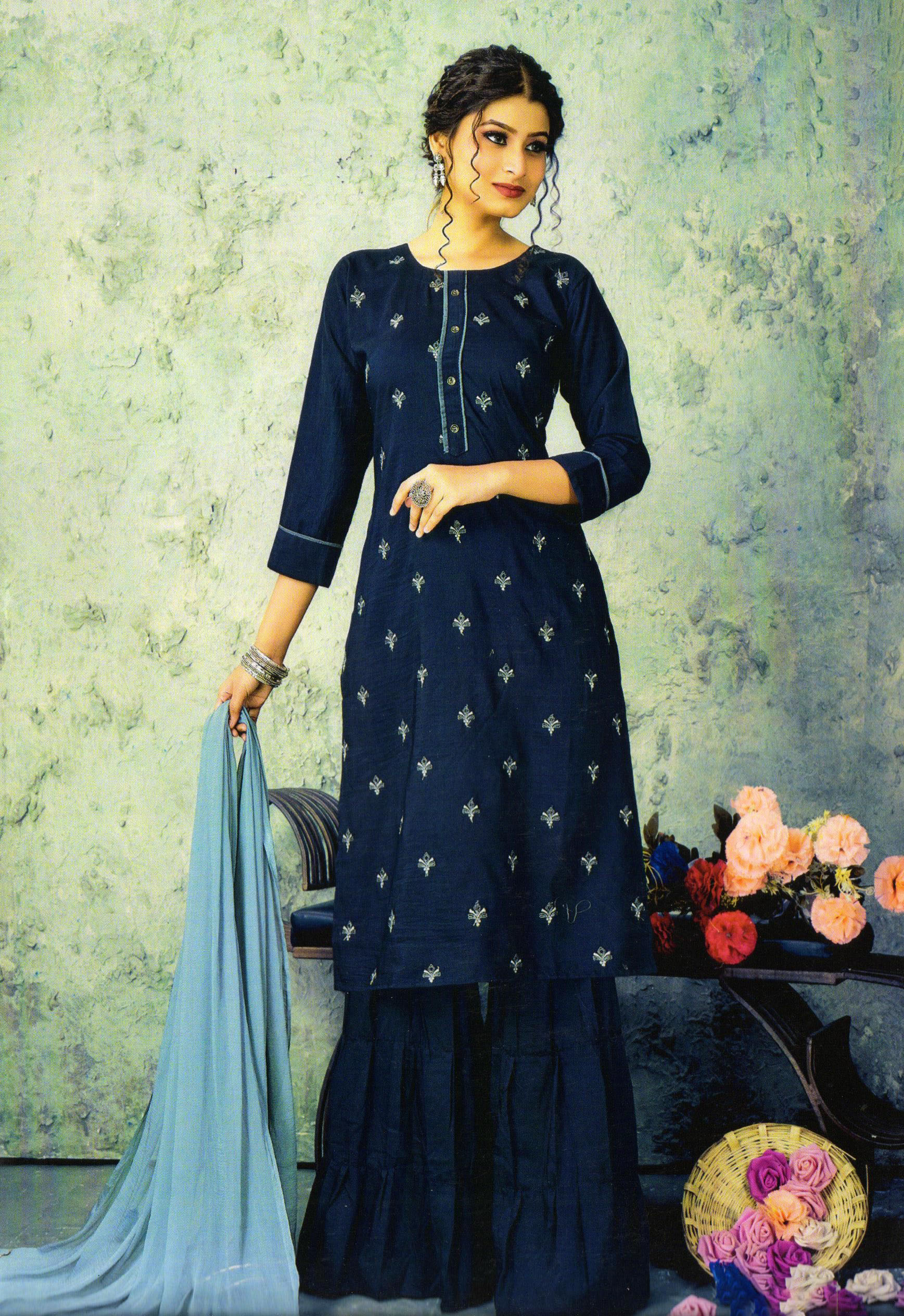
The sharara set is one of the most graceful pieces in Indian ethnic wear: a kurti paired with wide, flowing pants that flare out from the knee, finished with a dupatta. It looks traditional and festive, yet it’s far lighter and easier to wear than a lehenga. This guide covers what a sharara set is, how it differs from similar outfits, how to choose the right one, and how to style it for festivals, weddings and everyday occasions.
What Is a Sharara Set?
A sharara set is a 3-piece outfit made up of a kurti, sharara pants and a dupatta. The sharara itself is a pair of wide-legged pants that fit closely at the waist and thigh, then flare out dramatically from the knee. The flare adds volume and movement, which is why sharara sets look so elegant when you walk or dance. The style is closely associated with Awadhi and Hyderabadi traditions and has been popular for festive and wedding wear for generations.
Sharara vs Palazzo vs Gharara
- Sharara: fitted through the thigh, then flares out from the knee, giving a dramatic, flowing effect.
- Palazzo: wide-legged from the waist down, for a relaxed, comfortable look.
- Gharara: a more structured style with a gathered flare joined at the knee, usually heavier and more formal.
If you want an outfit that feels traditional but is still comfortable to wear for hours, a sharara set sits comfortably in the middle.
When to Wear a Sharara Set
- Weddings and pre-wedding functions: mehendi, haldi and sangeet
- Festivals: Karwa Chauth, Diwali, Eid and Navratri
- Family gatherings: pujas, dinners and celebrations
- Special occasions: a minimal, solid-colour set also works for dressy dinners and events
How to Choose the Right Sharara Set
Look at the Embroidery
Heavily embroidered sharara sets are best for weddings and formal events, while minimal designs suit festivals and smaller gatherings. A good example is this minimal embroidered sharara set in a solid colour, a graceful choice if you prefer refined, understated ethnic wear.
Consider the Colour
Solid colours like maroon, emerald, navy, mustard and pastel shades are easy to style and re-wear. A solid sharara set can look completely different with a change of dupatta and jewellery, which makes it more versatile than a heavily patterned set.
Check the Fit and Flare
The waistband should sit comfortably, and the flare should fall evenly. Wear the footwear you plan to use when checking the length, since shararas are usually worn at ankle length or slightly above the floor.
Sharara Fabrics: What to Expect
- Cotton and cotton blends: breathable and easy to maintain, ideal for daytime festivals and everyday dressy wear.
- Rayon: soft with a fluid fall, comfortable for long wear.
- Georgette: light and flowing, which shows off the flare beautifully, though it needs gentler handling.
- Silk blends and embellished fabrics: richer and more formal, best for weddings and evening functions.
Sharara Styling by Body Type
- Petite: choose a high-waisted sharara and a shorter kurti, and wear heels to elongate the silhouette.
- Tall: longer kurtis and generous flares look especially graceful.
- Pear-shaped: a longer kurti that skims the hips balances the flare below.
- Apple-shaped: choose a straight, flowing kurti that doesn’t cling at the midsection.
How to Drape the Dupatta
The dupatta can completely change the feel of a sharara set. A one-shoulder drape is easy and elegant, a draped-over-both-shoulders style looks traditional and formal, and a loose, relaxed drape suits daytime events. See our guide to draping and styling your dupatta with a co-ord set for step-by-step ideas.
Jewellery and Footwear
Choose jewellery based on the amount of embroidery: minimal sets can take statement jhumkas or chandbalis, while heavily embroidered sets need simpler pieces. For footwear, juttis, embellished flats and block heels all work well, as long as the hem clears the floor comfortably.
Caring for Your Sharara Set
Hand wash or use a gentle cycle in cold water, dry in the shade and iron on the reverse side to protect the embroidery. Store folded, and use a breathable cotton cover instead of plastic.
Frequently Asked Questions
What is the difference between a sharara and a palazzo?
A sharara is fitted at the thigh and flares from the knee, while a palazzo is wide from the waist.
Can I wear a sharara set to a wedding?
Yes, sharara sets are a popular wedding-guest choice, especially for mehendi, haldi and sangeet.
Is a sharara set comfortable?
Yes, the loose flare allows free movement, which makes it more comfortable than a lehenga for long events.
Which dupatta goes best with a sharara set?
A contrast or embellished dupatta adds colour to a solid-colour set, while a matching dupatta gives a unified look.
Browse the full Sharara Set collection, or explore more festive styles in our 3-piece set buying guide.